
Stronger, Safer, Longer-Lasting: The Future of WPC Joists


If you’ve ever worked with metal joists, you already know the pain points: heavy weight, complex installation, and corrosion concerns over time.
Wood-plastic composite (WPC) joists were developed to solve these problems — lighter, easier to install, and more corrosion-resistant. But they introduced a new challenge: creep.
Creep is the slow deformation of a material under sustained load. For load-bearing structures like joists, especially those with long spans, creep is a critical safety concern.
The Real Issue with Standard WPC Joists
Standard solid WPC joists can replace light-gauge steel in many applications. They’re cheaper and easier to work with. But under constant pressure, they gradually deform — sometimes leading to structural failure.
To improve this, some manufacturers added a sheet-metal core inside the WPC joist. It helped — but not enough. The metal core and the WPC cladding only formed a flat, two‑dimensional bond. When pressure was applied, stress concentrated on that single plane, leading to accelerated creep.
What’s the Solution?
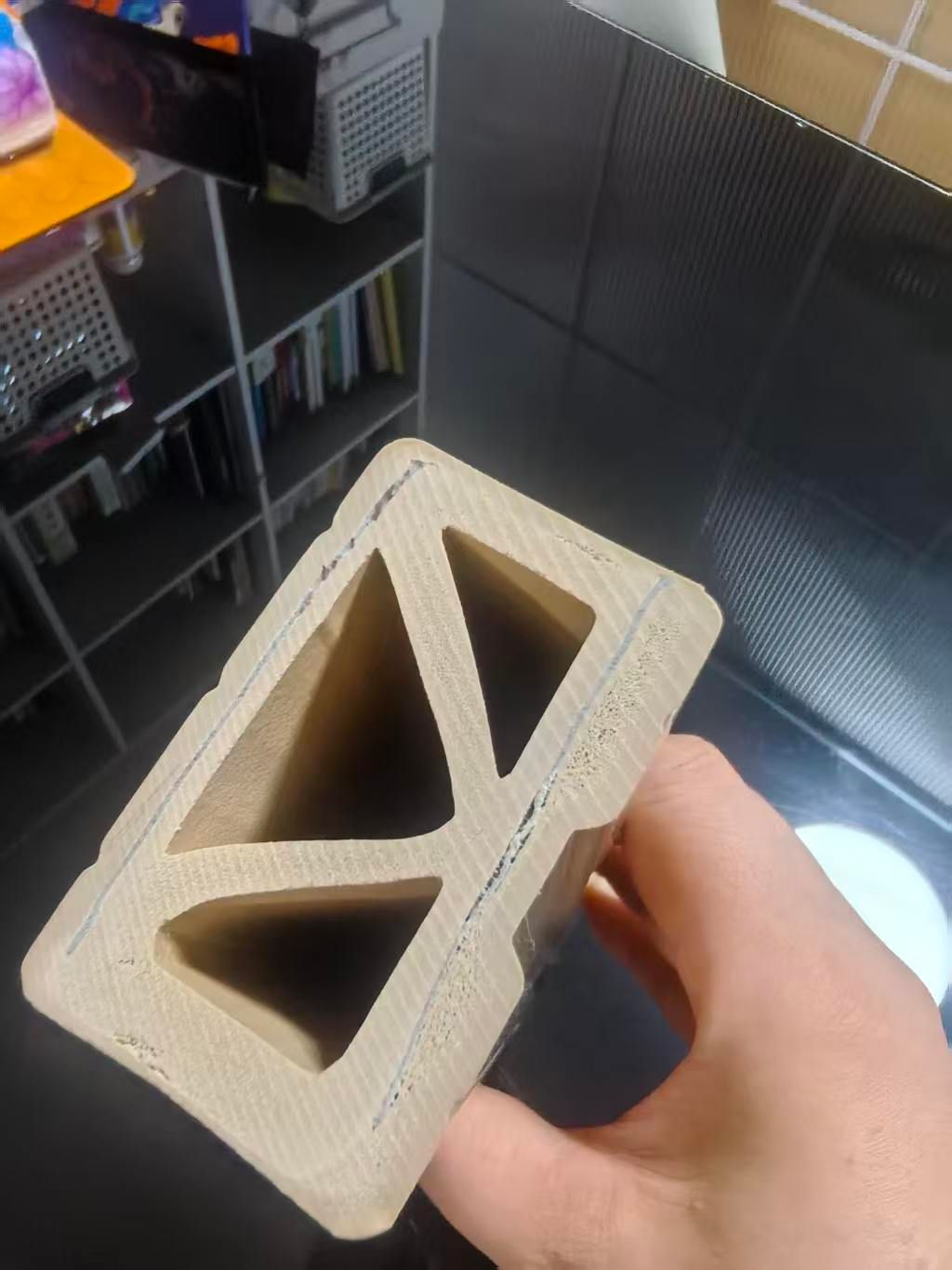
The answer lies in a new design: a low‑creep solid WPC joist with a rigid internal reinforcement member.
Here’s how it works:
The reinforcement member is not a solid sheet, but a layered body with through‑holes running through it — some of them angled relative to the load‑bearing surface.
When the WPC structural body is molded around this reinforcement, some of the WPC flows into those through‑holes, creating multiple independent "bridges" that connect the top and bottom sections of the joist.
Why This Design Works
When pressure is applied to the load‑bearing surface, the force is distributed in two directions:
Part of it is absorbed by the top layer of the reinforcement
The rest is transferred through the through‑holes to the bottom section
This dual‑path load distribution reduces stress concentration and makes the entire structure more integrated. The result?
- Lower creep rate
- Better structural integrity
- Improved safety
In contrast, conventional designs with sheet‑metal cores concentrate stress on a single plane, leading to faster deformation.
What This Means for You
Whether you’re working on commercial buildings, residential projects, or industrial facilities, choosing the right joist matters — not just for today, but for the long‑term stability of your structure.
Low‑creep solid WPC joists offer:
- Better load distribution
- Slower creep deformation
- Lighter weight and easier installation than metal
- Corrosion resistance
- Cost‑effectiveness
If you're looking for a framing solution that lasts, this is worth a closer look.
Interested in learning more?
We’d be happy to share test data, samples, and technical details. Reach out — and let’s build something that stands the test of time.